

Australian golf used to be sold as sun, patience, and a quiet walk between gum trees. That version still exists, but it now shares the range with radar units, pressure mats, AI shot trackers, indoor simulator bays, GPS watches, and apps that know a player’s miss before the player admits it. The biggest change is that average golfers now train with information once reserved for tour vans.
The timing matters. Golf Australia’s 2024/25 participation report put national club membership at 477,220 and described the fifth straight year of membership growth. Off-course formats are also pulling new players in. Technology is not replacing the course; it is giving people more doors into the game.
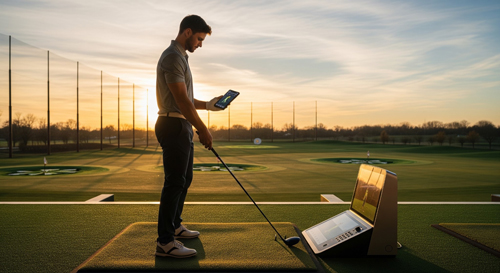
The Range Has Become a Diagnostic Room
A bucket of balls once gave a player one answer: did the shot look good? Launch monitors have made that answer look primitive. Ball speed, club path, attack angle, spin rate, carry distance, launch window, and dispersion now turn practice into a case file.
This is useful only when golfers avoid drowning in numbers. A 20-handicap player needs the two metrics that explain the miss. Good coaching in 2026 is partly about subtraction: find the pattern, choose the drill, ignore the rest until the strike improves.
Simulators Are Changing Who Gets to Practise
Australia’s weather is not always kind to practice. Heat, work hours, rain, distance, and daylight all limit time on course. Indoor simulators solve a boring problem with serious consequences: access. A player can hit wedges after work, test driver dispersion at night, or play a virtual round without losing half a Saturday.
The best simulator sessions do not pretend to be real golf. They isolate decisions. Distance control, start line, and club gapping become easier because feedback arrives instantly.
Betting Data Has Made Golf Fans Read the Game Differently
Golf fans now watch a round with two timelines: the leaderboard and the probability story underneath it. A player can sit three shots back and still look dangerous if the wind drops, the reachable par-fives arrive, and the leader keeps missing fairways. Users comparing a betting app in Bangladesh for golf markets usually look for outrights, top-10 finishes, head-to-head matchups, three-ball markets, live odds movement, and clear bet slip control. That does not make golf predictable. It makes the viewing more analytical, because course conditions, tee times, strokes gained data, and bankroll discipline matter before any stake is placed.
Wearables Are Quietly Rewriting Golf Training
The cleverest golf innovations are no longer the loudest. Arccos Air, for instance, uses a small wearable rather than club sensors and says its AI has been trained on 1.5 billion real golf shots. That kind of tracking turns a round into a post-match review: where shots were lost, which distances leak strokes, and which club choice keeps creating trouble.
The hard truth is uncomfortable. Many amateurs do not need a new swing first. They need proof that their “safe” club is not safe, their wedge distances are guesswork, and their favourite aggressive line costs more than it wins.
Mobile Golf Is Part of a Bigger Sports Screen
The modern player does not separate golf from the rest of their sports life. They check tee times, GPS yardages, handicap records, coaching clips, tournament scores, and live markets from the same phone. In that wider sports routine, MelBet becomes relevant for users who want mobile access to odds, account tools, event markets, and settlement history without waiting for desktop time. Golf betting still needs restraint because one bad hole can swing a market brutally. The useful habit is to treat data as context, not permission.
The Next Advantage Is Knowing What to Ignore
Technology is changing golf training, but the ball still has to be struck. The best players will not be the ones with the most devices. They will be the ones who turn data into one clearer practice task, then leave the phone alone long enough to hit the shot.